Movember and men’s health

Movember and men’s health
Trigger warning: This post discusses mental health and suicide
It’s that time of year again, when men grow a mo in support of Movember – a great cause that raises valuable funds to support health issues facing men. We’ll chat a bit further down this blog post about why some men can easily grow a moustache and some can’t, but first let’s talk about the important issues this cause supports.

According to Movember, the top three areas of men’s health that require our attention are prostate cancer, testicular cancer and mental health and suicide. We also think that a complete discussion about current issues facing men’s health should include diabetes, heart disease and sexual health (you can read more about those in our previous blog post). We’ll briefly cover prostate and testicular cancer here, but after the year we’ve all had, talking about mental health and suicide is the main focus of our post.
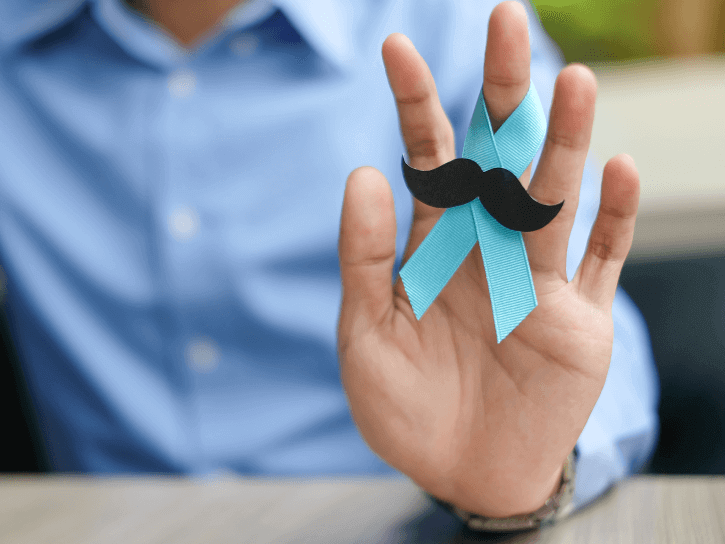
The state of play for the top three health issues facing men:
Prostate cancer – According to [Cancer Australia] one in five Australian men have a risk of being diagnosed with prostate cancer by the age of 85, making it the most commonly diagnosed cancer in 2025. It accounts for 30% of all new male cancer cases (2025), and 13% of male deaths from cancer (2025). In good news however, there is a 96% chane of surviving at least five years.
Testicular Cancer – This type of cancer is far less common than prostate cancer, with just over 1,000 diagnoses in 2025 and a 98% five-year survival rate. However, according to the Cancer Council, diagnoses have grown by 50% in the last 30 years – perhaps because more men are checking for symptoms using simple self-examination techniques. If so, that’s fantastic, because testicular cancer, if found early can usually be successfully treated.
There are a range of tests we can organise for you to assist with an early diagnosis of any type of cancer. These could be ultrasounds, blood tests, biopsies, CT scans – we can discuss exactly what you need and help you every step of the way. Simply make an appointment with one of our GPs to get the process started.
Mental Health and Suicide – Mental health and suicide issues have rocketed to the forefront of issues facing Australian men, especially since COVID-19. According to Beyond Blue, 43% of men will experience anxiety or depression at some stage in their lives, and of the nine people who die by suicide everyday, seven are men.
There are a wide range of factors that may lead to depression or anxiety – things such as problems around relationships, employment, physical health problems or drug and alcohol use.
There are a number of things you can do to help yourself or someone else, and we’ll look at those in the next section.

__Look out for the signs __
Often you know in yourself when you aren’t feeling just quite right. It is normal to feel a bit “flat” sometimes (or angry, or sad), but it becomes concerning when those feelings persist for weeks or months at a time. Sometimes they can also be accompanied by physical symptoms such as fatigue, losing or gaining weight, headaches, or general lethargy. Sometimes you might find that you just don’t feel like doing the things you normally enjoy doing like catching up with friends or playing sport.
If you’ve experienced any of these it is important to know that support is available, and there are steps you can take to start to feel better. .

Taking action on men’s health
Here are some steps you can take to help yourself or someone else:
Talk to someone – whether it be a friend, family member or a stranger on a support line, reaching out and asking for help or just having a chat is a great first step.
Make simple lifestyle changes – such as improving your diet, cutting back on alcohol, increasing your exercise regime or getting more sleep.
Call for help – organisations that offer 24/7 support for free include Lifeline (13 11 14), Beyond Blue (1300 224 636) and MensLine Australia (1300 789 978). You can view a full list of mental health helpline services on the Healthdirect website.
Talk to a professional – SwiftDoc offers counselling and psychology services as well as GP services – allowing you to build a support team around you to help you work through any issue. All consultations are via video link so you can talk to us in an environment that you feel comfortable in, at a time and place that suits you. View our services to select one that suits you best.

Movember – why is it that some men can’t grow a mo?
At the start of this post, we promised to chat a bit about why it is that some men can grow a moustache and some can’t – it is Movember after all!
For the most part, it is genetics – some men are just far hairier than others! There’s also an age factor – young men in their late teens and early 20’s may struggle, but over time find their facial hair thickens up. Then they get older and it might get thinner again! Ethnicity also can play a part – for example Chinese men often find it hard to grow facial hair, whereas men of Middle Eastern or Mediterranean descent may find it quite easy. Testosterone can also be a factor, but only if your levels are really low. As with most things, it helps to lead a healthy lifestyle too – have a good diet, get plenty of sleep, reduce your stress and don’t smoke.
Whether you can grow a great mo, or nothing at all, Movember is a fantastic cause to support, to help draw attention to, and raise funds for important issues facing Australian men. Find out all about Movember on their website.
Sources:
Cancer Australia, Prostate Cancer in Australia Statistics, Accessed July 2026.
Cancer Australia, Testicular Cancer in Australia Statistics, Accessed July 2026.
Beyond Blue, Men's Mental Health. Accessed July 2026.
All content on the SwiftDoc website is created and published online for informational purposes only. It is not intended to be a substitute for professional medical advice and should not be relied on as health or personal advice.
Always seek the guidance of your doctor or other qualified health professional with any questions you may have regarding your health or a medical condition. Never disregard the advice of a medical professional, or delay in seeking it because of something you have read on this Website.
If you think you may have a medical emergency, call your doctor, go to the nearest hospital emergency department, or call the emergency services immediately.