Dealing with workplace injuries

Dealing with workplace injuries

Dealing with workplace injuries
One of the most popular services we offer is help with the completion of medicals for WorkCover claims. Dealing with workplace injuries can be quite an onerous and stressful process for both employers and employees by taking on the medical side of the claims, while communicating with you on the progress each step of the way. Not only that, but we can treat your employees so they get better…and back to work…faster. We’ve also got access to imaging and pathology services, and we can coordinate any required specialist services as well.
It’s a good thing too, because there were over 146,000 serious claims for workers’ compensation in the financial year 2023-24, involving at least one week of lost working time. That equates to more than 400 serious claims per day across Australia.
What are the main reasons for a workplace injury claim?
According to the Australian Institute of Health and Welfare, by far most claims (in fact 89%) were related to injuries or musculoskeletal disorders. These include things such as injury to muscles, tendons, ligaments or joints, broken bones, wounds, cuts, or internal organ damage or tissue damage. The remaining 11% relates to mental health conditions and diseases related to the digestive system or nervous system. Most of these injuries happen while employees are at work, but some (which are also covered under the legislation) happen on the way to or from work, or while on a lunchbreak.

Who is injured in the workplace?
As you’d expect, those who work in physical occupations are more likely to incur an injury in the workplace. That’s occupations such as labouring and building, working in a trade or operating or driving machinery. There is also a relatively high incidence amongst those who work in the community, such as in health, aged or disability care, childcare, hospitality or emergency services.
Much smaller numbers of claims (but not insignificant) occur in traditional “white collar” industries such as professional services, sales, managerial roles and administrative roles.
What sort of injuries or incidences happen in the workplace?
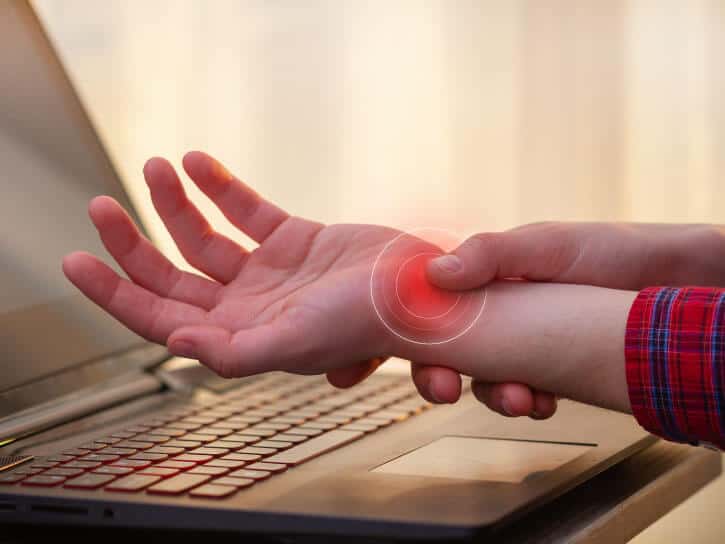
There are a wide range of injuries that take place in the workplace. This could be anything from an accident with a piece of machinery, an object falling on someone, a trip or a fall, inhalation of dangerous substances, burns or spills, right through to issues related to poor set up of a chair/desk, repetitive strain injury or mental health issues related to workplace bullying or stress. Sadly a number of Australian workers lose their lives due in the workplace (188 in 2024).
How can you prevent workplace injuries?
As always, prevention is better than cure, and it would be great if our services related to WorkCover claims were never needed. It helps to have robust workplace health and safety practices in place such as assessing and reducing risks in workplaces, adequately training employees in safe practices and keeping up to date with best practice. Despite best efforts, accidents still do take place however, and having a process in place for speedy medical assistance through SwiftDoc will help to ease the trauma for both employees and employers.
What’s next?
If one of your employees has incurred an injury in the workplace and you need to complete a WorkCover claim, select WorkCover consultation from our menu of services to get the process underway. Your employee can also download our app to book an appointment with a GP, and from there we can also arrange any imaging, blood tests, psychological assessments or other specialist appointments as required. We’ll also complete all the medical paperwork needed for your claim and keep you in the loop every step of the way.
Sources:
SafeWork Australia, Key Work Health and Safety Statistics Australia 2025, Accessed July 2026.
All content on the SwiftDoc website is created and published online for informational purposes only. It is not intended to be a substitute for professional medical advice and should not be relied on as health or personal advice.
Always seek the guidance of your doctor or other qualified health professional with any questions you may have regarding your health or a medical condition. Never disregard the advice of a medical professional, or delay in seeking it because of something you have read on this Website.
If you think you may have a medical emergency, call your doctor, go to the nearest hospital emergency department, or call the emergency services immediately.